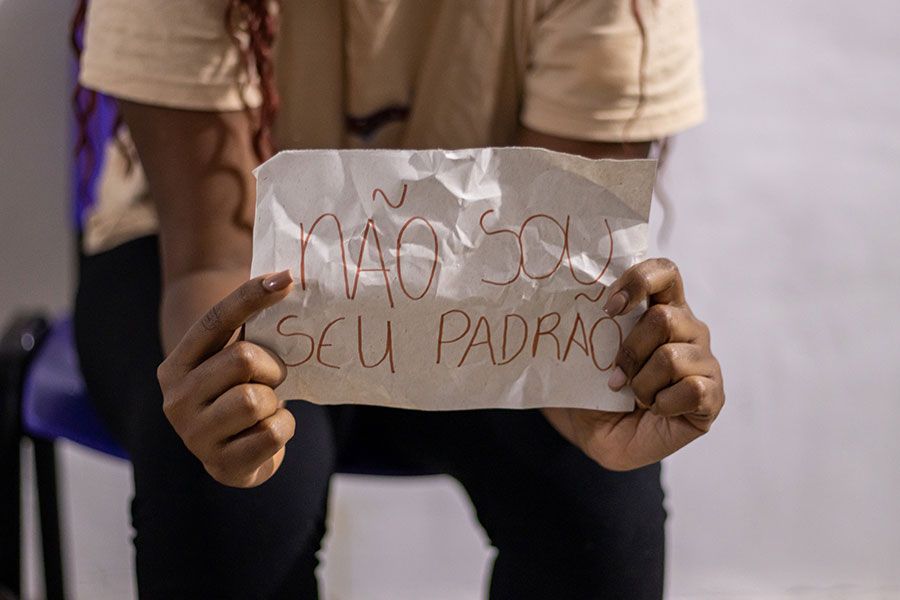
The objective is to strengthen the protagonism of young women residents of favelas, encouraging their confidence to occupy public spaces, narrate their own stories, and expand possibilities for social transformation through art.
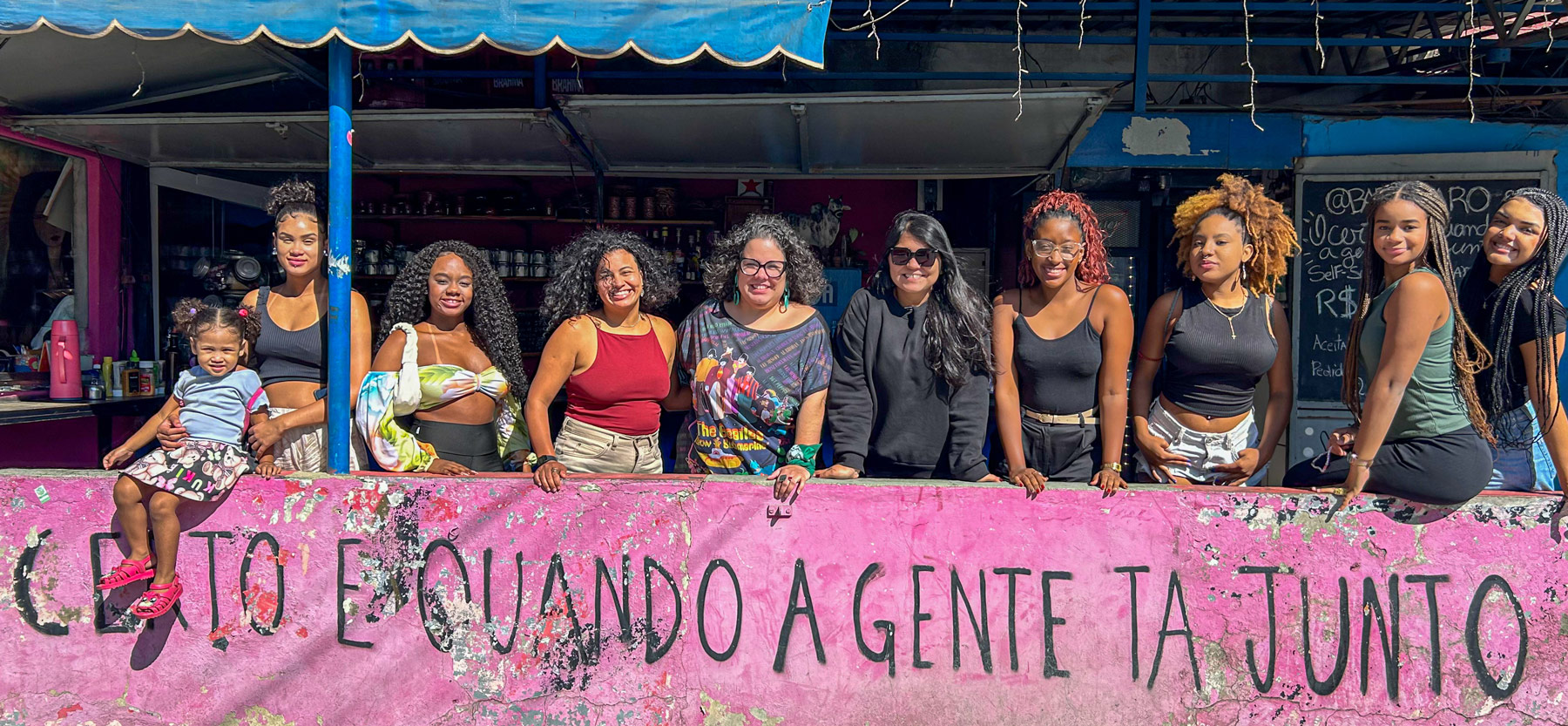
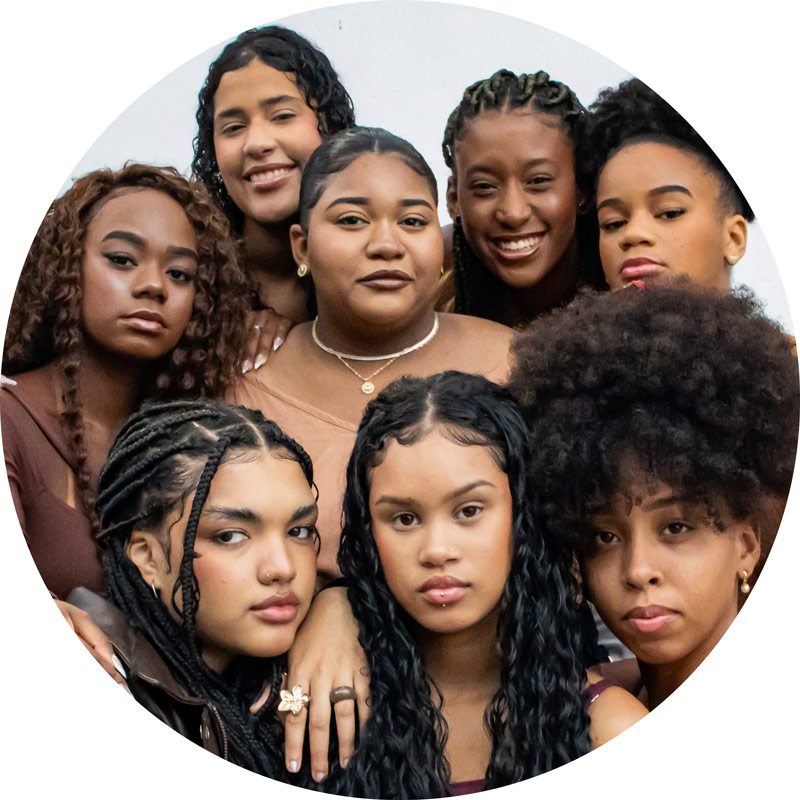
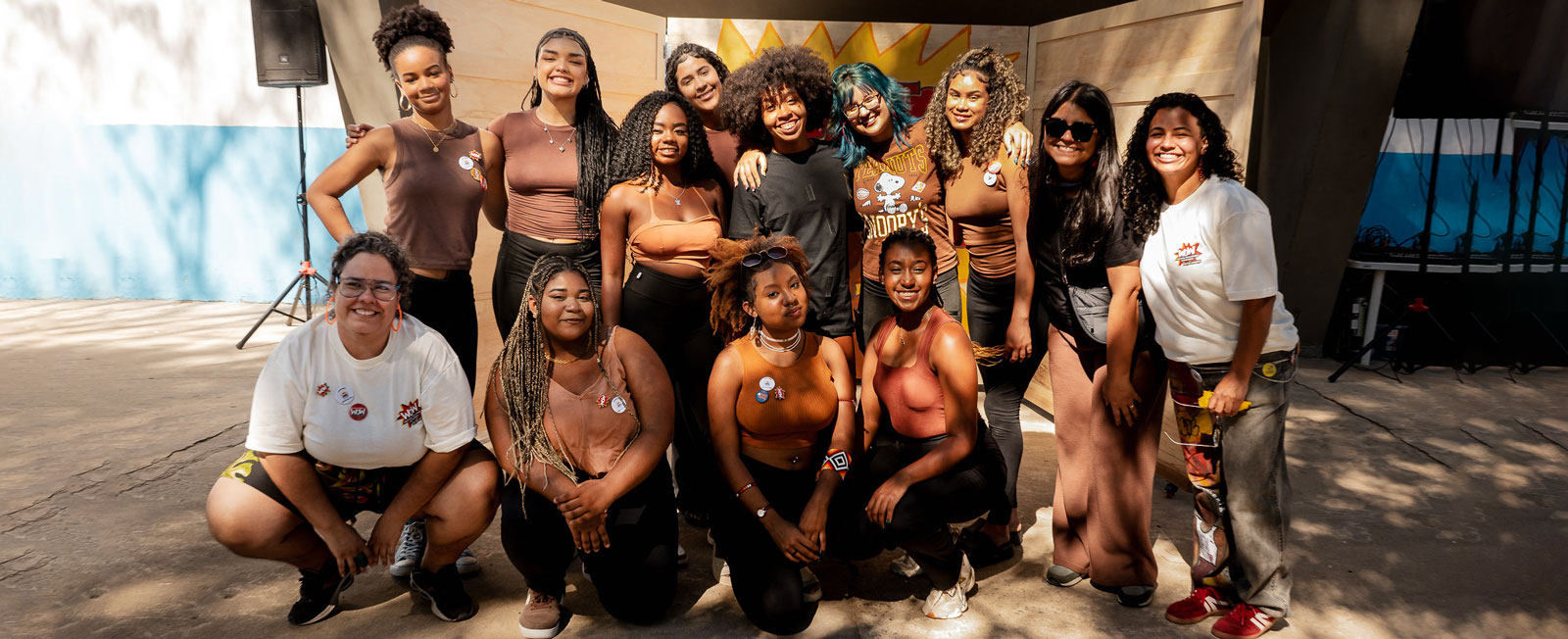
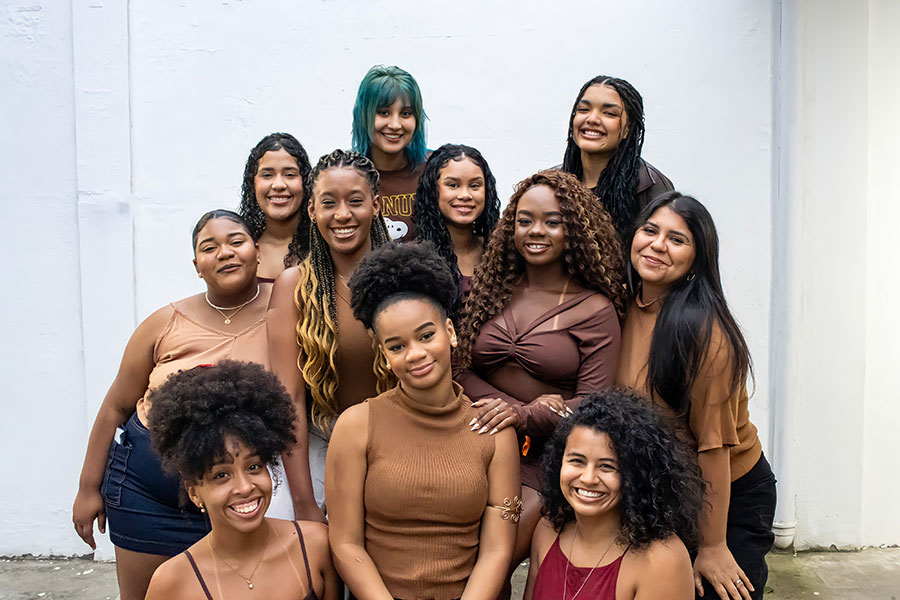
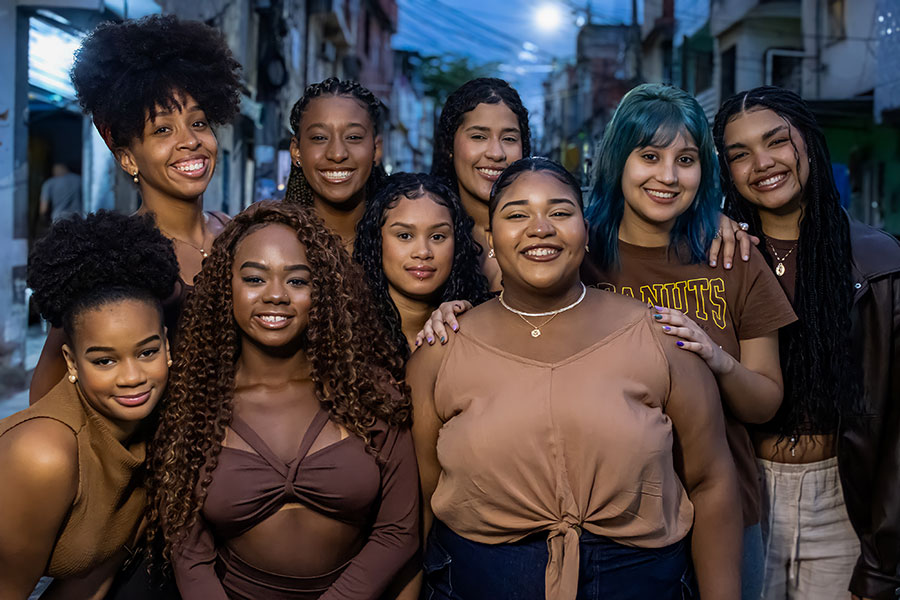
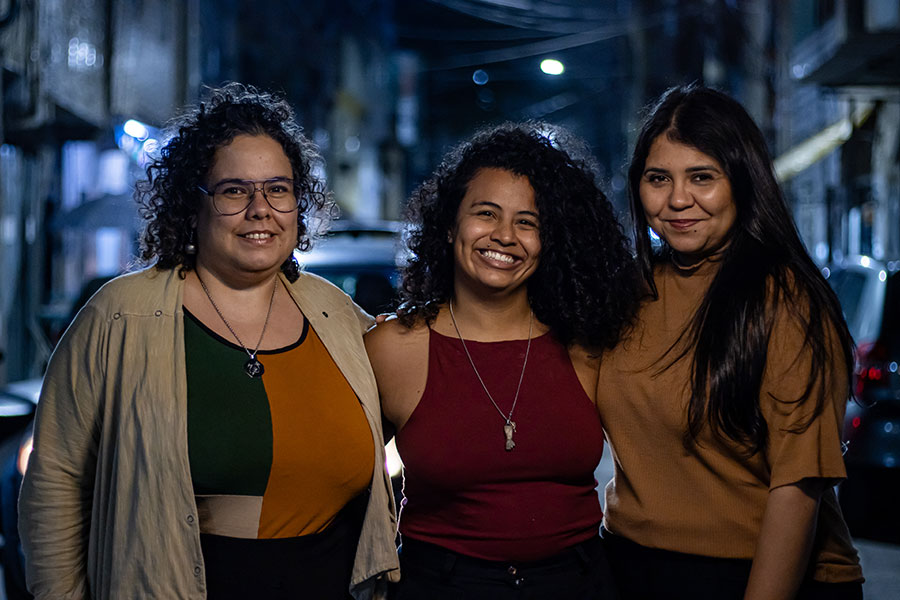
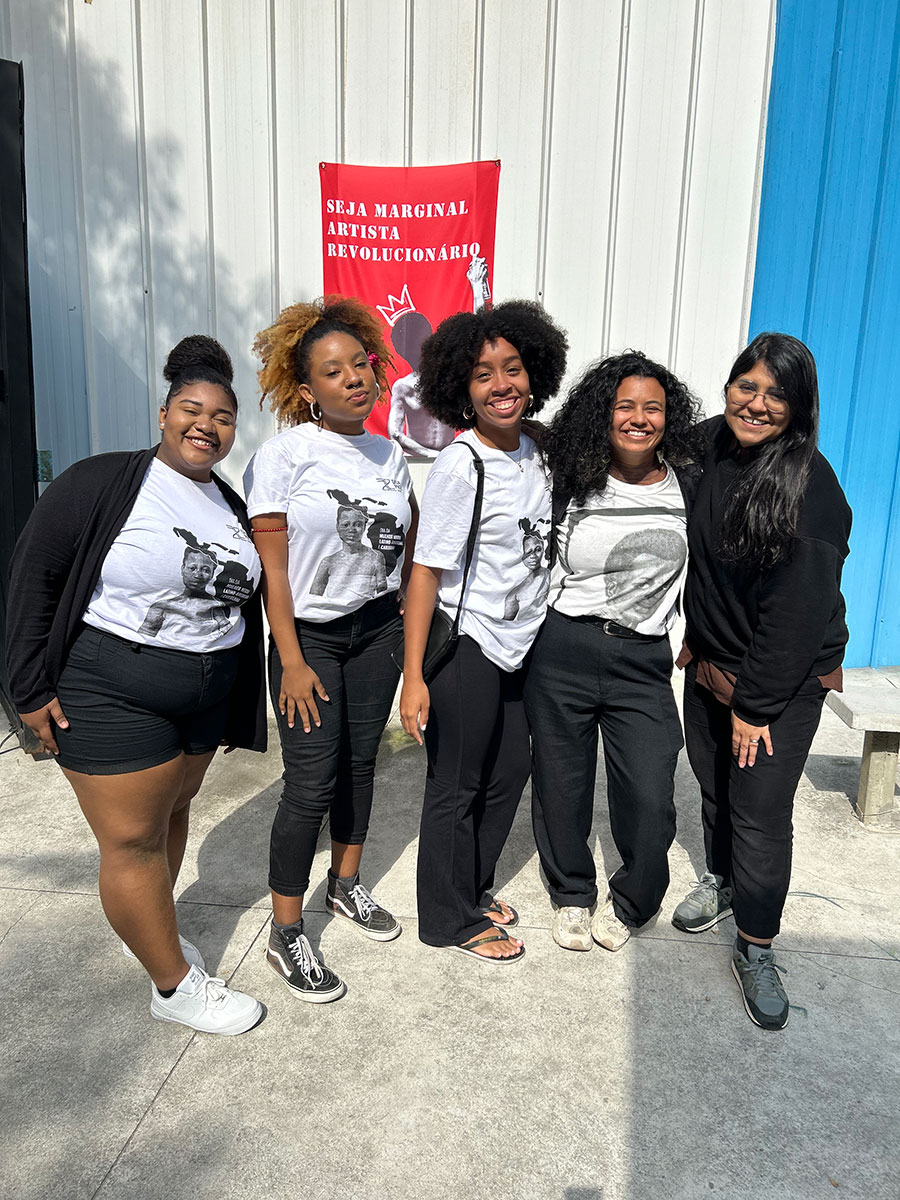
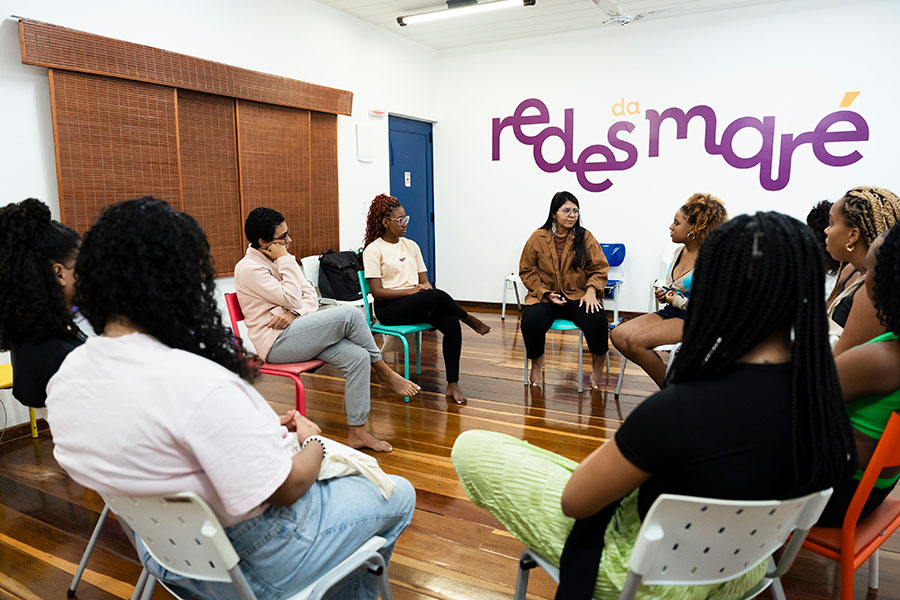
The group is made up of ten young artivists, aged between 15 and 20, residents of Maré and Alemão.
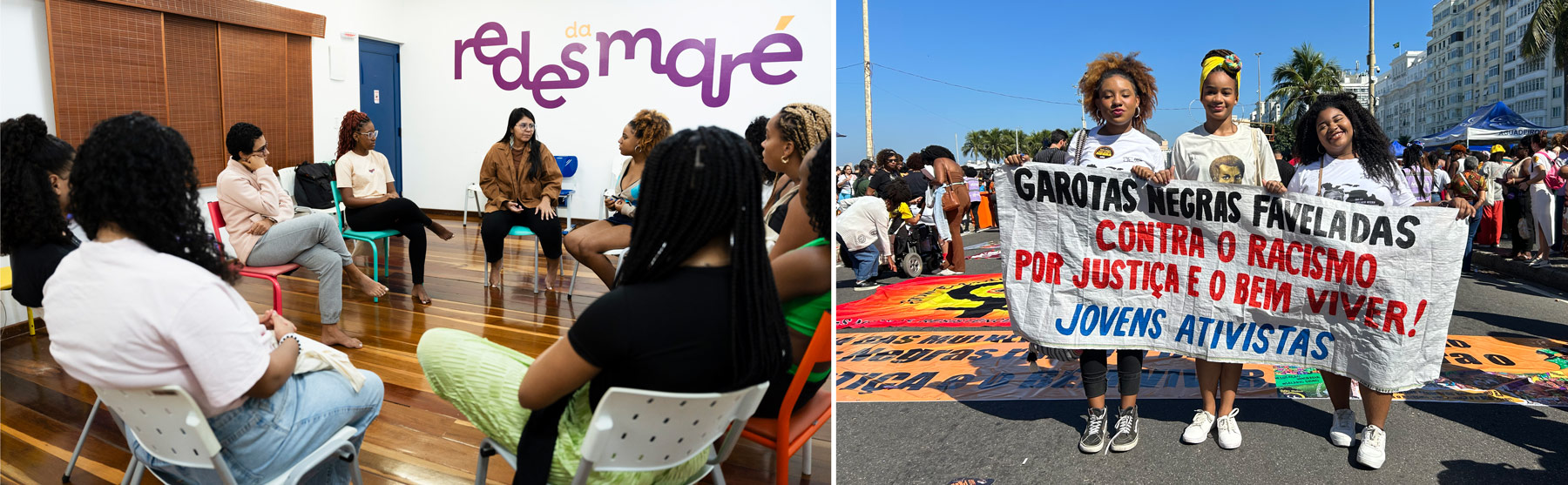
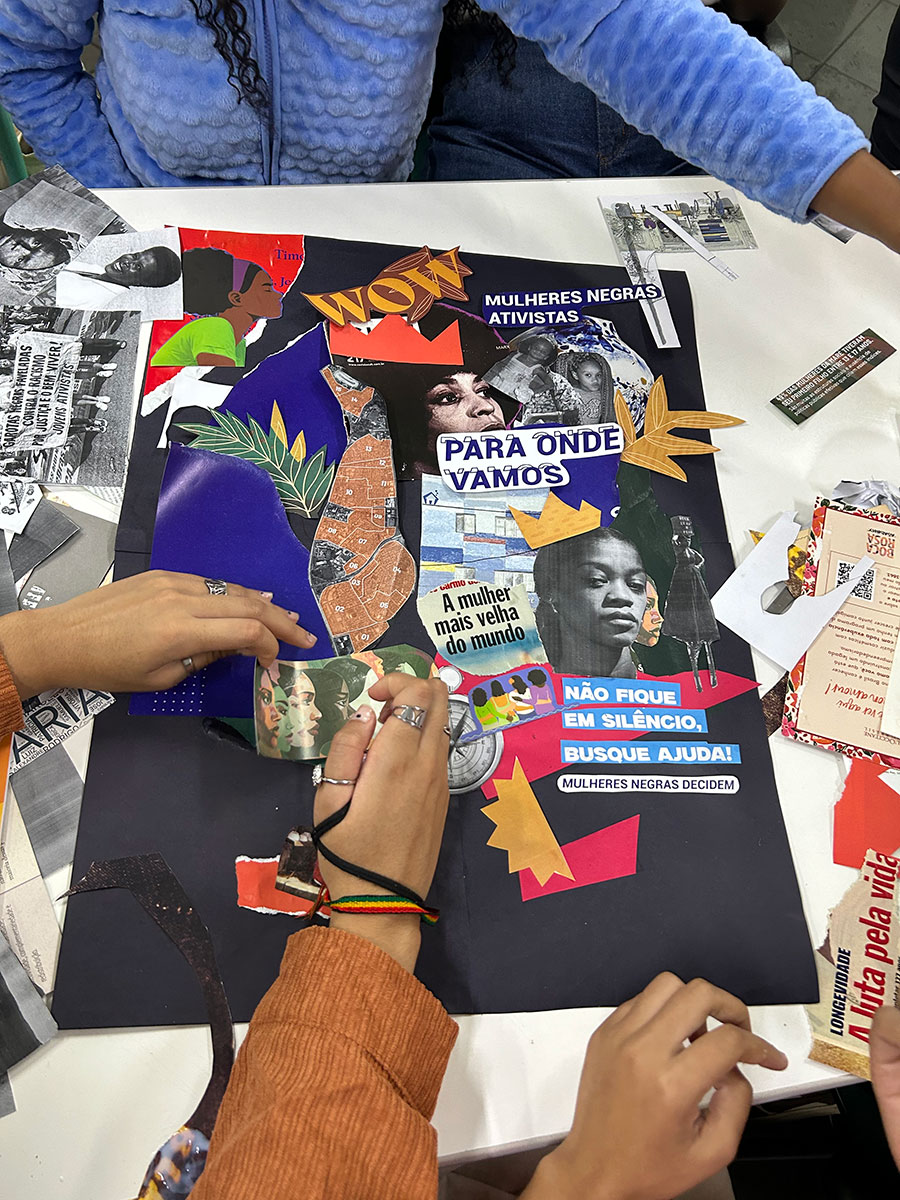
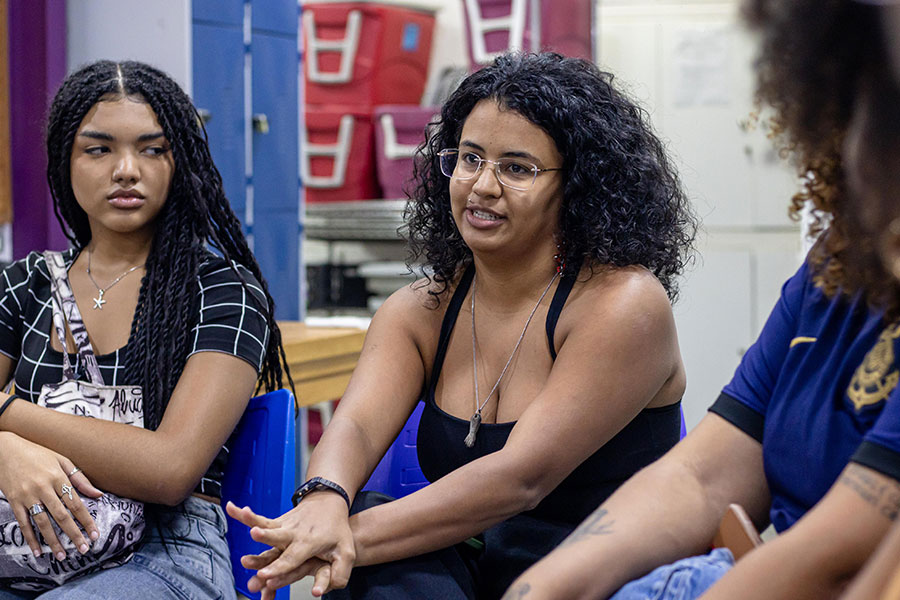
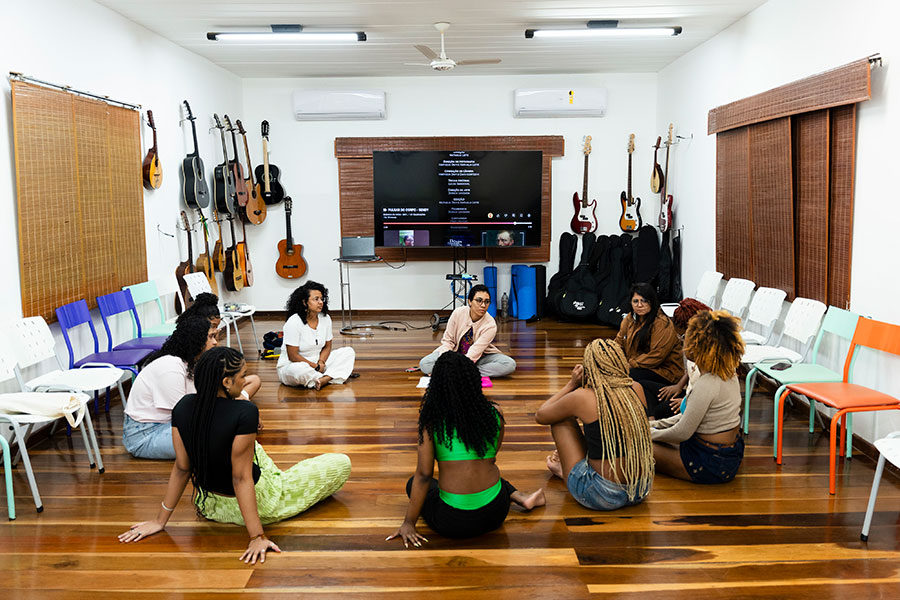
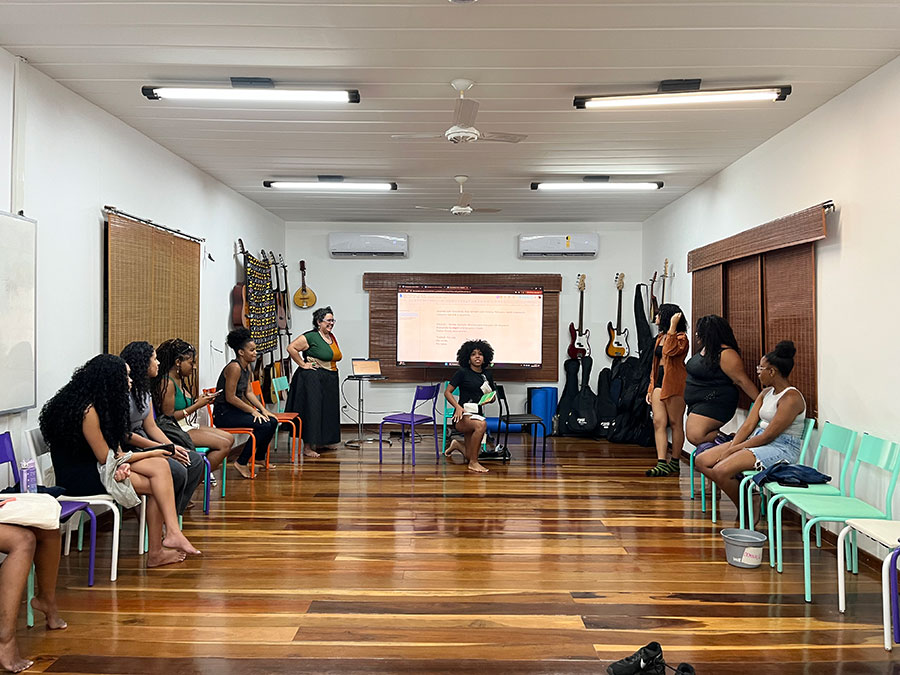
Through a variety of workshops, from collage to dance, theatre, and other languages, the project encourages artistic expression as a tool for collective elaboration and social intervention, articulating aesthetic practices and reflections on reproductive, gender, racial, and climate justice.
More than offering workshops, the project seeks to consolidate a process of critical and affective formation that recognizes art as a political language and the body as a territory of resistance and creation.
Another central point of the project is to understand the relationship between youth-led feminist activism, artistic expression, and the prevention of Gender-Based Violence (GBV). Empirical efforts include identifying lived experiences and systemic factors of GBV among young people in favelas, as well as documenting existing creative and feminist interventions.
Methodologically, the project develops an approach of “creative encounters among young people” to explore how cultural and artistic practices can be mobilized to inspire and sustain activism. The insights obtained will support the creation of a set of methodological tools produced by young women from Maré to guide similar initiatives.
In this sense, the development of three actions is underway:
Research aimed at investigating whether activism can be understood as a tool for preventing gender-based violence, observing how political and artistic engagement impacts self-perception, relationships, and forms of collective care. The research is qualitative, with interviews and focus groups with the young participants.

The project at the Women of the World Festival
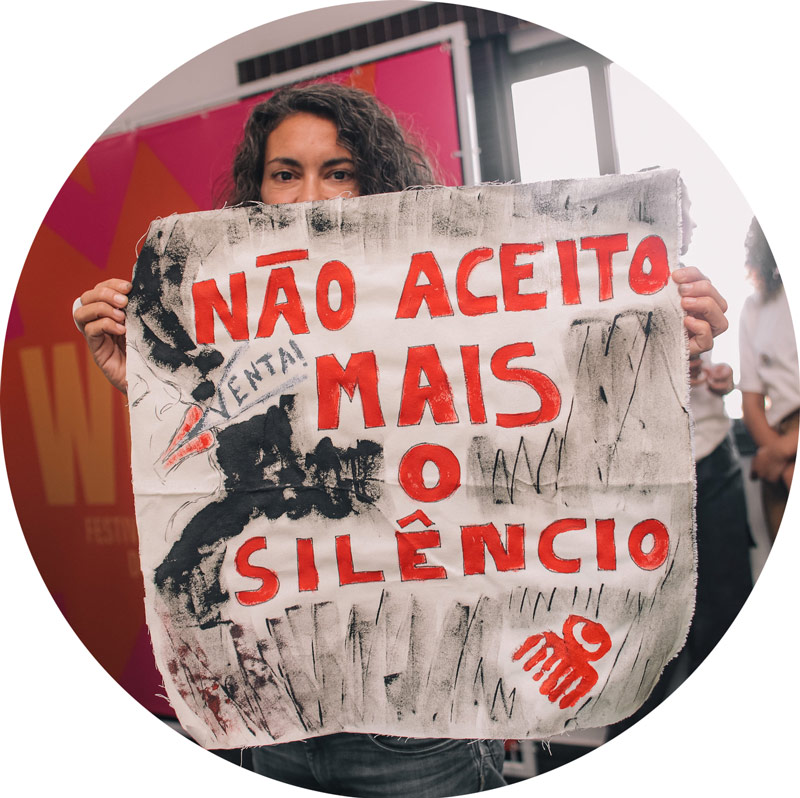
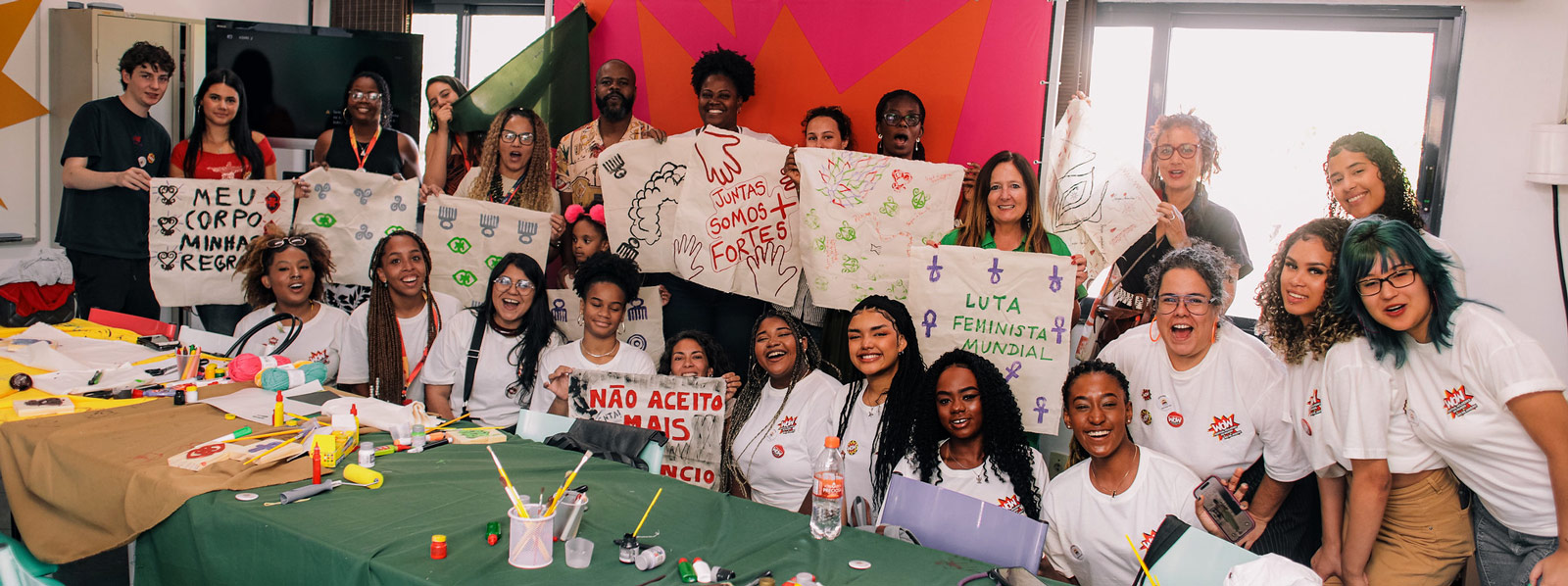
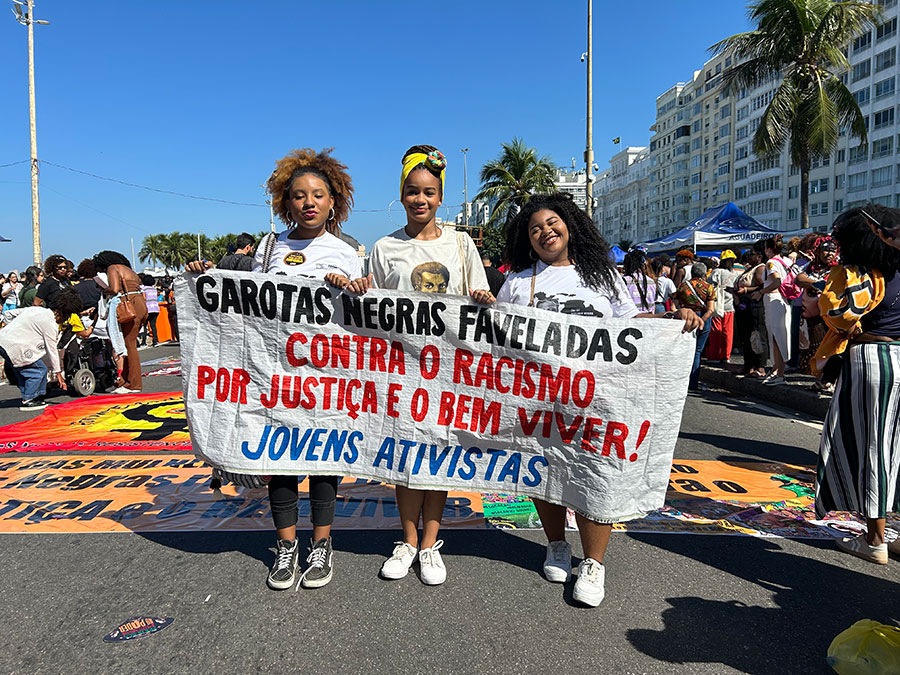
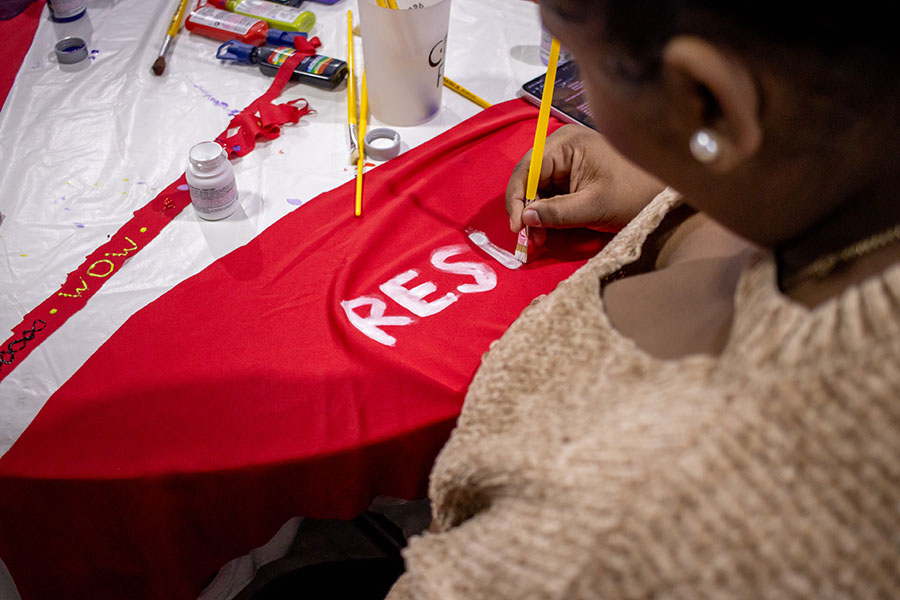
The Young Artivists project establishes a strategic relationship with the WOW – Women of the World Festival in Maré, strengthening the participation of young women from Maré and Complexo do Alemão in the creation and facilitation of public spaces for speech, art, and advocacy. In addition to presenting an artistic performance during the event held in October 2025, participants actively contributed to building the festival’s program, ensuring that the voices and experiences of women from favelas were present across different languages and formats. The young women also led a flag-making workshop, preparing visual interventions for the Black Women’s March, held in Brasília in November 2025, and participated in panel discussions, sharing reflections on art, territory, and gender justice. This multiple presence — artistic, political, and curatorial — expresses the meaning of the project: ensuring that young women are not only invited to participate, but recognized as authors and influencers of the cultural and feminist agendas of their time.
The history of Brazil is marked by processes of popular resistance, in which Black and peripheral women have played and continue to play fundamental roles in the struggle for rights. Maré, the largest complex of favelas in Rio de Janeiro, and Complexo do Alemão carry in their trajectories the strength of collective action and activism led by women who, over decades, have challenged structural inequalities and built networks of struggle and care for the defense of life, territory, and rights.
From confronting state violence to securing basic services such as sanitation and electricity, the histories of struggle of women from Maré and Alemão are examples of community activism that not only guarantee improvements in living conditions but also produce political formation. To think about activism in these territories means recognizing that resistance is born in everyday life, in confronting injustices, and in inventing collective strategies for social transformation.
The Maré and Alemão Favelas, in the North Zone of Rio de Janeiro, are territories of dispute and also of creation, where art intertwines with politics as a tool for denunciation, mobilization, and the valorization of local identity and memory.


The experience of the Young Artivists demonstrates that art, when linked to political struggle, is capable of opening paths for transformation in popular territories. By bringing together young people from Maré and Alemão in a process of creation, the project reaffirms that resistance is also a collective practice, strengthened through the sharing of knowledge, pain, achievements, and experiences.
In this sense, each workshop ceases to be merely a space for aesthetic production and becomes a laboratory for collective justice and care, in which the voices of girls and women are recognized as central to the construction of a more dignified future. If the history of Black and peripheral women has always been marked by confronting structural inequalities, the protagonism of the Young Artivists continues this legacy, but also reinvents it: through art, young women not only narrate their reality but produce new possibilities of existence in the territories they inhabit. In the end, what is affirmed is a horizon of struggle and creation in which justice, care, and memory move together, strengthened by the collective action that young women are building.
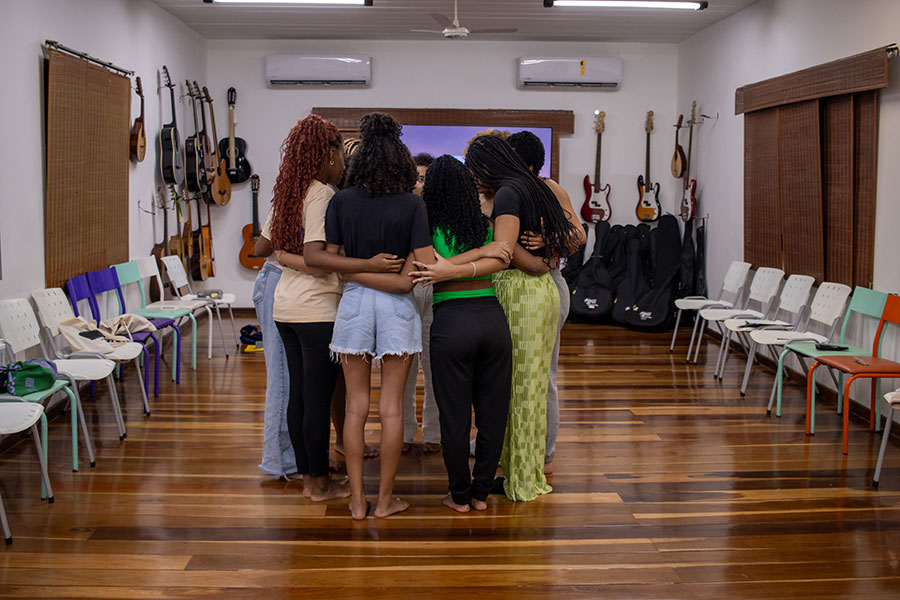
Art is a tool of resistance, but also of care and collective elaboration. More than training artists, the project invests in art as a mode of existence and a way of strengthening community bonds, creating networks of support and imagination.
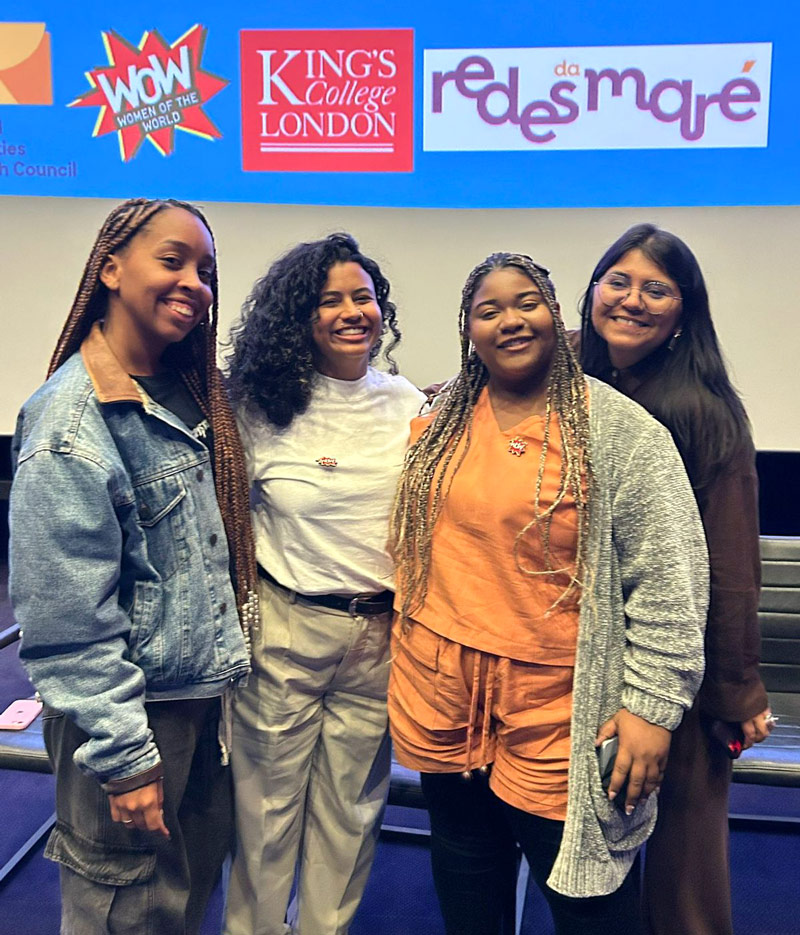
Developed by the Women’s House of Maré, the Young Artivists project has an important international partnership with the English universities King’s College London and Queen Mary University and the organizations WOW Foundation and People’s Palace Projects. Collaboratively between the two countries, the articulation brings together aesthetic practices, social reflections, and political action.
In October 2025, a group representing the Artivists traveled to London and Durham, in England, to attend a British edition of the WOW – Women of the World Festival, founded in 2010 in the United Kingdom. During this exchange, the young women participated in workshops in film, tap dance, dance and painting and presented their artistic performance “Unfitting Oppressions.” On that occasion, the Brazilian group also exchanged experiences with ten other girls from Durham, who are also part of the project alongside the WOW Foundation and King’s College.
Researcher: Julia Leal
Producer: Stéfany Silva
Artistic mediator: Dayana Sabany
Artivists: Alessandra Maria Silva de Oliveira, Ana Beatriz Alves do Nascimento, Anna Clara da Silva Cordeiro, Fernanda Luiza Viana Ferreira, Laryssa Maia Donato Manoel, Letícia Vitória Silva Guimarães, Raquel Marreiro Rodrigues da Silva e Thayssa Cristina Magalhães Pereira.
TODOS OS DIREITOS RESERVADOS @ 2025 REDES DA MARÉ - Associação Redes de Desenvolvimento da Maré
As imagens veiculadas neste site tem como objetivo divulgar as ações realizadas para fins institucionais. Entendemos que todas as fotos e vídeos têm o consentimento tácito das pessoas aqui fotografadas / filmadas, mas caso haja alguém que não esteja de acordo, pedimos que, por favor, entre em contato com a Redes da Maré para a remoção da mesma (redes@redesdamare.org.br).