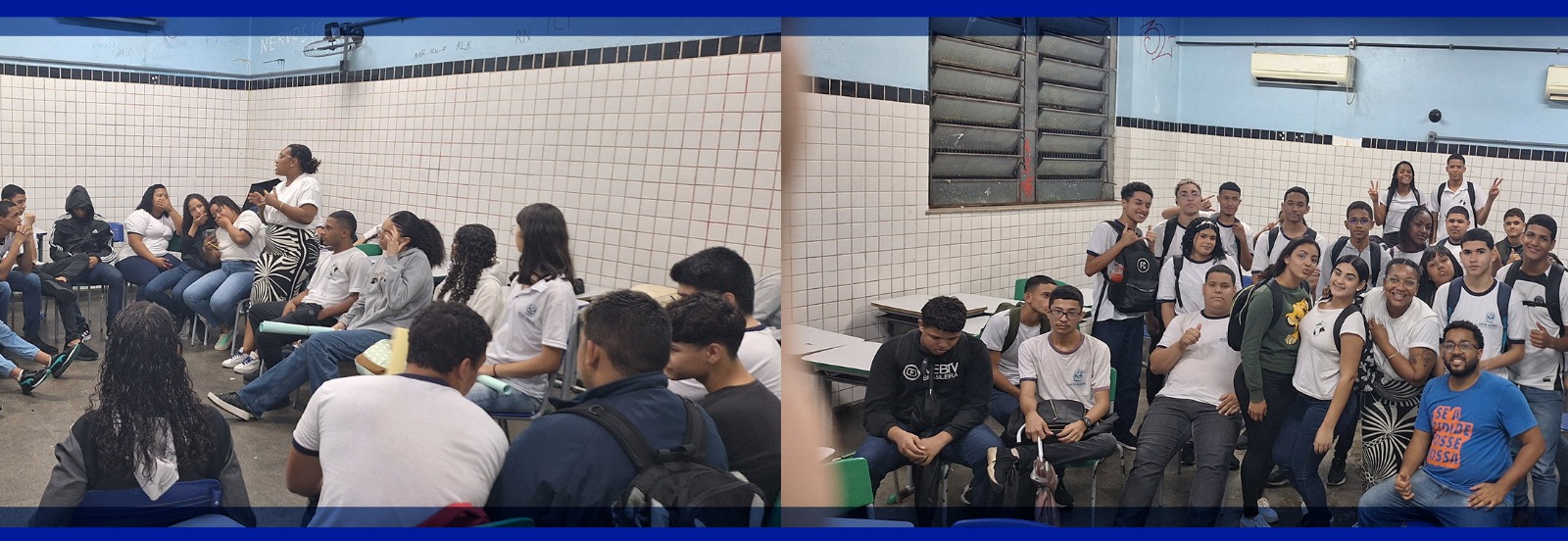
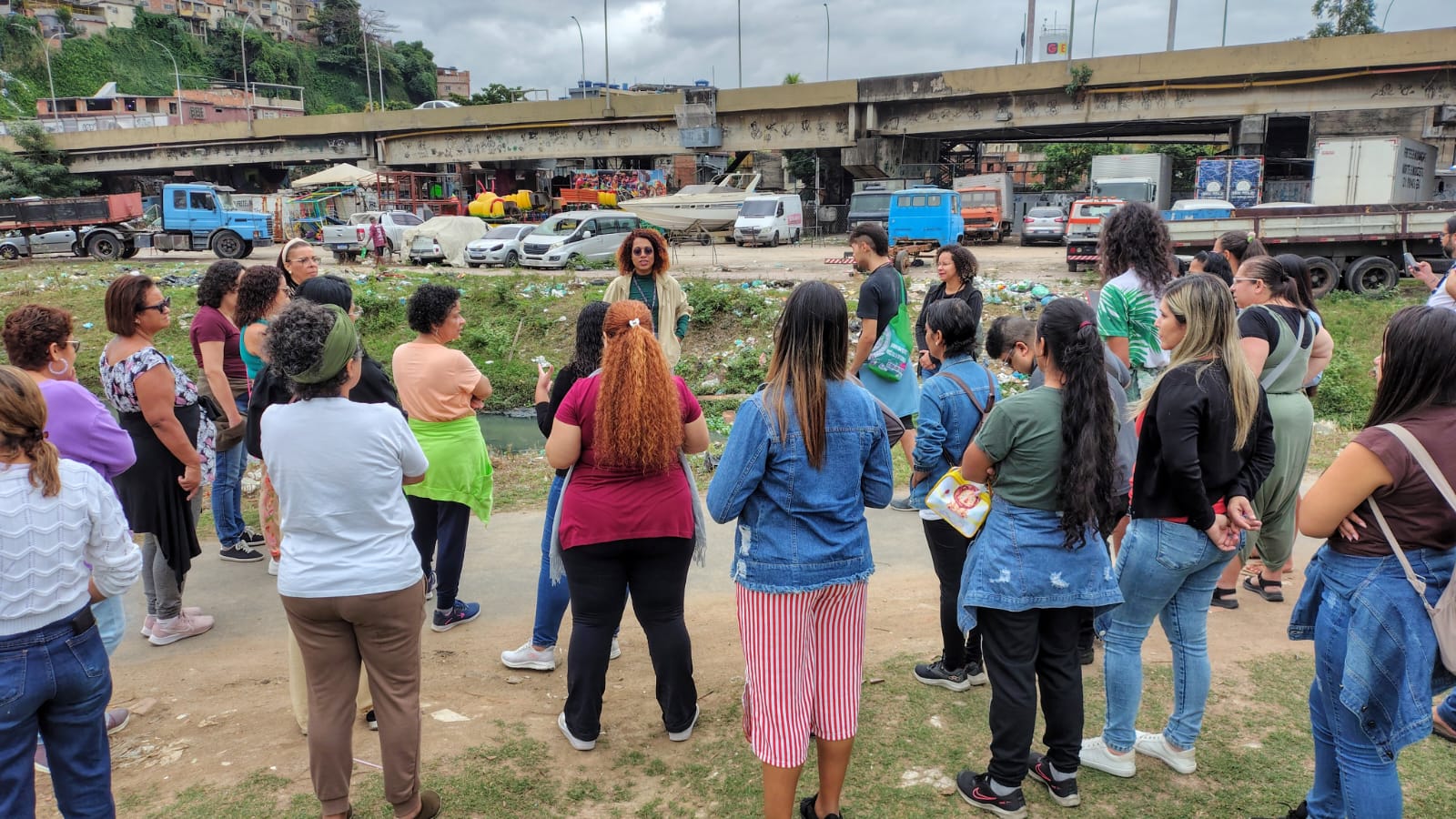
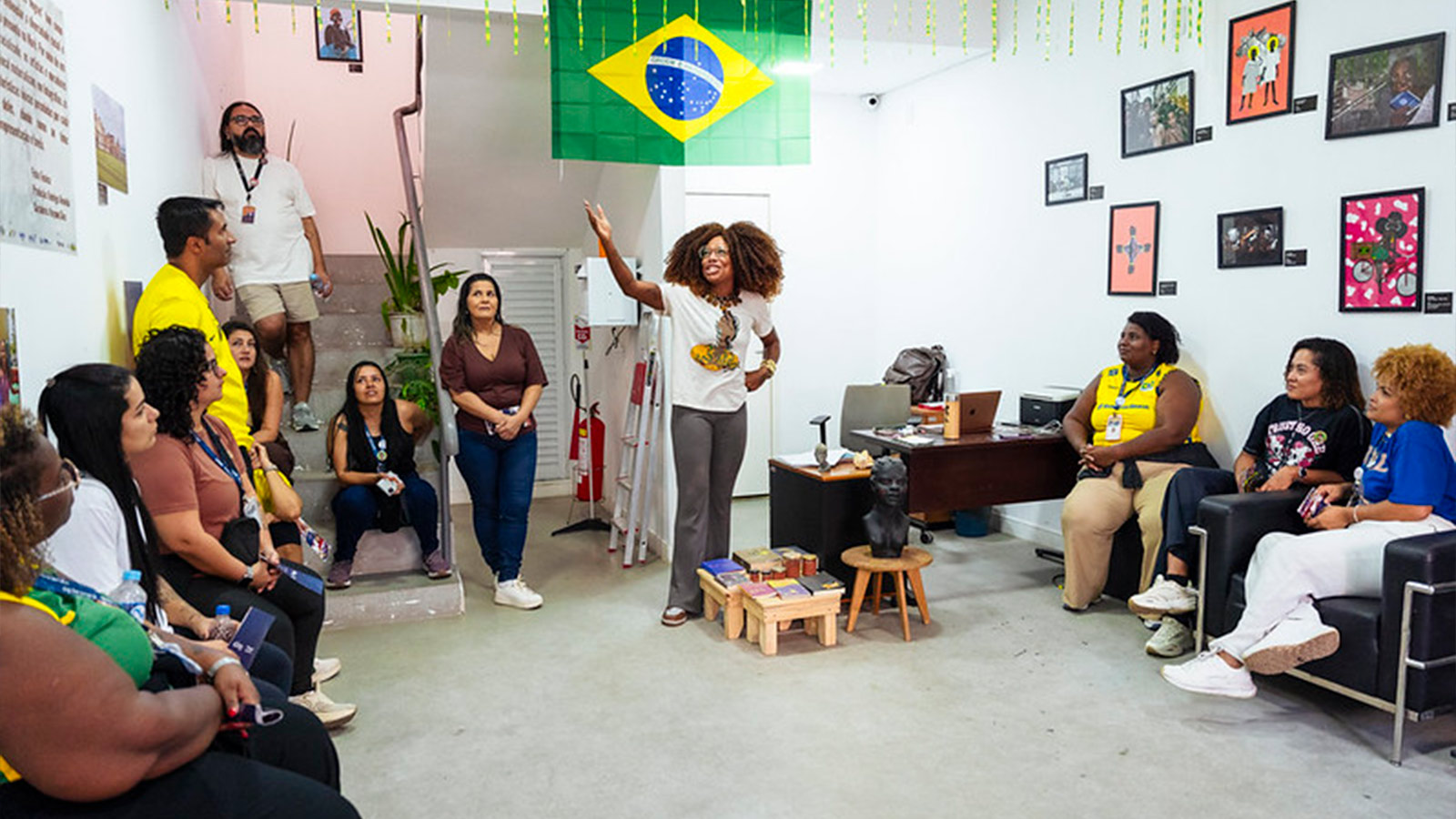
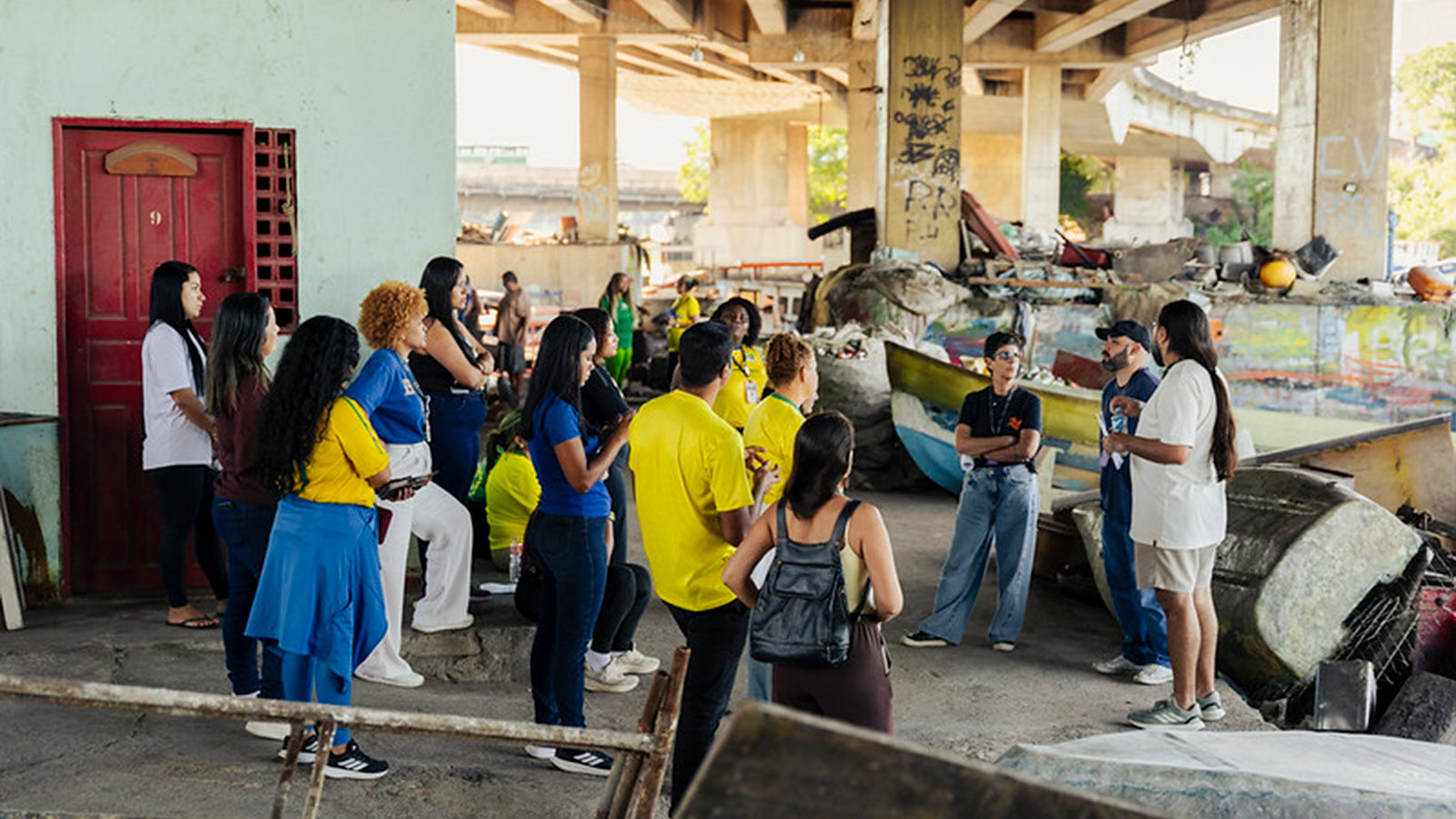
The project operates through direct engagement with the leadership and coordination teams of partner public schools, identifying demands, interests, and challenges from everyday school life. This process guides the collective development of activities and enables their integration into each school’s Political-Pedagogical Project (PPP), strengthening educational practices connected to the social, racial, and territorial realities of Maré.
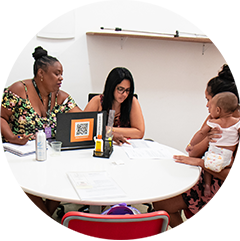
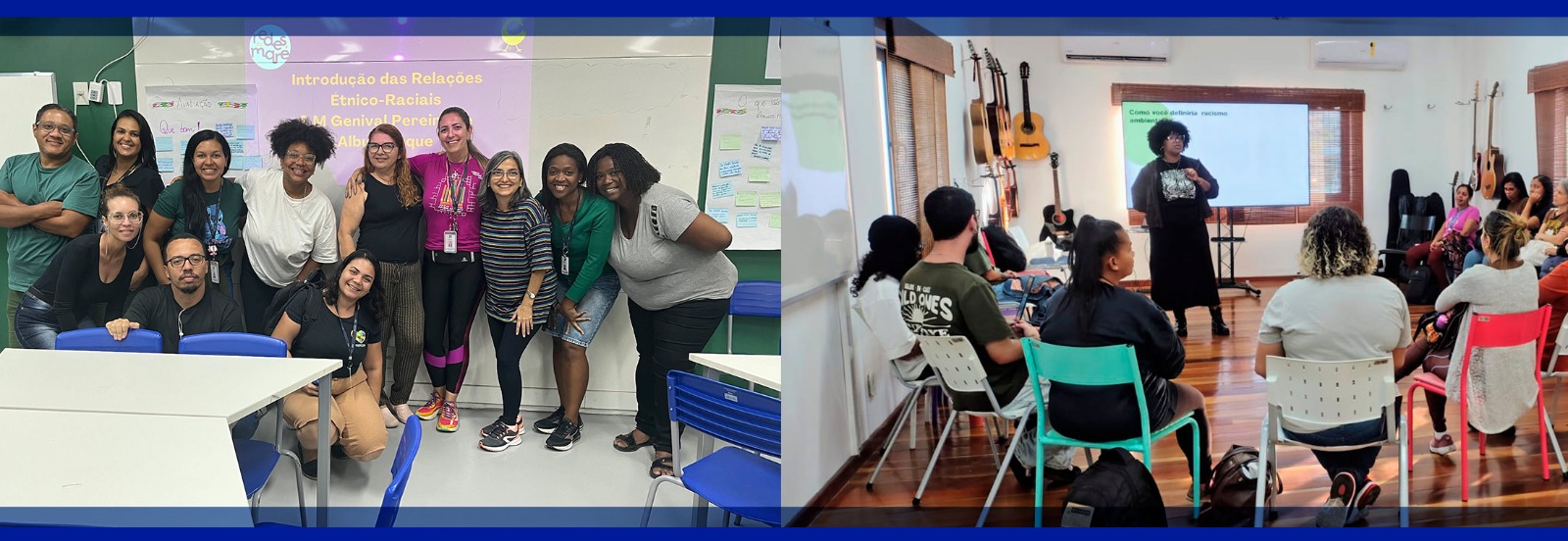
Based on this dialogue, workshops, discussion circles, courses, and other educational activities are carried out by different teams and projects of Redes da Maré, addressing topics such as the History, Memory, Culture, and Identity of Maré; Introduction to Ethnic-Racial Relations Education; Environmental Emergency; as well as discussions on territory, gender, and rights, with workshops also conducted by the teams of Black House of Maré and The Women’s House of Maré.
During the most recent project cycle, carried out in 2025, 69 educational meetings were held, involving 696 education professionals and reaching 1,616 participants in extracurricular activities, demonstrating the strengthening of the relationship between schools, the community, and the territory. In 2025, the project brought together 18 partner schools, expanding to 23 schools in 2026.
The struggle for the right to education is at the origin of the creation of Redes da Maré, even before the organization was formally established in 2007. This process emerged from community mobilization and the collective construction of strategies to guarantee rights in a territory with approximately 140,000 residents.
Within this trajectory, the creation of the Pre-College Course (Curso Pré-Vestibular – CPV) in 1998 marked a milestone in promoting more equitable education across Maré’s 15 favelas. In the 2000s, this work expanded through the Petrobras Children Program in Maré, with activities developed in public schools throughout the territory.
Engagement with public schools is a historic and foundational guideline of Redes da Maré’s institutional work, linking community mobilization, policy advocacy, and the development of educational practices within the territory. Over the years, this relationship with schools has become a key strategy for strengthening public education and expanding educational opportunities for children, adolescents, and young people in Maré. One example is the partnership with João Borges de Moraes State School, a school inaugurated in 2018 as a result of territorial mobilization and policy advocacy led by Redes da Maré and other local organizations. The partnership includes a Robotics Project focused on developing knowledge in technology, programming, and logical thinking, connecting education, innovation, and learning opportunities for students in the territory.
In 2020, in response to the impacts of the COVID-19 pandemic on education, Redes da Maré organized virtual meetings with school administrators from municipal and state education systems, strengthening dialogue with public schools in the territory during a period of deepening educational inequalities. In-person activities resumed in 2022, expanding the involvement of educators, students, and families.
In 2023, the School Engagement initiative underwent a restructuring process, strengthening continuous support for school units and systematizing practices historically developed by Redes da Maré in collaboration with public schools in the territory. This process increased the integration of activities into daily school life and consolidated a more coordinated approach aligned with the pedagogical and social demands of school communities.
Starting in 2024, with support from BrazilFoundation, the project adopted a continuous educational approach aimed at different members of the school community.
Activities began to be implemented through workshops, discussion circles, field classes, and educational processes developed in dialogue with the needs of partner schools and integrated into their Political-Pedagogical Projects (PPP), in coordination with the 4th Regional Education Coordination Office (IV CRE) and the Ethnic-Racial Relations Management Office (GERER) of the Rio de Janeiro Municipal Department of Education.
During the same year, the project advanced its integration with everyday school life, particularly through initiatives supporting the development of pedagogical projects related to race and gender issues. Throughout 2025, the project expanded from 16 to 18 partner schools, strengthening its network with school communities and increasing opportunities for collective learning. In 2026, it began supporting 23 public schools in Maré, consolidating a continuous, territory-based approach focused on strengthening public education policies.
The expansion of regular support to schools has contributed to strengthening connections between schools, the territory, and the community, increasing the participation of educators and students in educational processes, and enhancing the project’s impact on the development of educational practices that are more responsive to Maré’s social, cultural, and educational realities.
The School Engagement Project seeks to strengthen the continuing training of educators and school communities through participatory, reflective, and territory-based methodologies, broadening discussions on territory, race, gender, diversity, accessibility, and the right to education. By combining training, listening, and continuous pedagogical support, the initiative contributes to educational practices that are more critical, inclusive, and connected to the realities of Maré.
The project’s work is also strengthened through the development of collaborative networks among schools, public institutions, universities, researchers, and social movements, promoting the exchange of experiences, the circulation of knowledge, and the recognition of practices developed within the territory.
The project maintains ongoing dialogue with public authorities, particularly municipal and state education systems, the State Department of Education (SEEDUC), the Municipal Department of Education (SME), and the Ministry of Education through the Secretariat for Continuing Education, Youth and Adult Literacy, Diversity and Inclusion (SECADI) and the National Policy for Equity, Education for Ethnic-Racial Relations, and Quilombola School Education (PNEERQ), aimed at promoting racial equity and strengthening anti-racist educational practices in public schools.
Coordination: Patrícia Vianna
School Engagement Team: Diego Marcelino, Fernanda França, and Marcos Melo
Email: eixoeducacao@redesdamare.org.br
WhatsApp: +55 21 99924 6462
Municipal Department of Education / IV CRE / GERER
TODOS OS DIREITOS RESERVADOS @ 2026 REDES DA MARÉ - Associação Redes de Desenvolvimento da Maré
As imagens veiculadas neste site tem como objetivo divulgar as ações realizadas para fins institucionais. Entendemos que todas as fotos e vídeos têm o consentimento tácito das pessoas aqui fotografadas / filmadas, mas caso haja alguém que não esteja de acordo, pedimos que, por favor, entre em contato com a Redes da Maré para a remoção da mesma (redes@redesdamare.org.br).