PROJECT

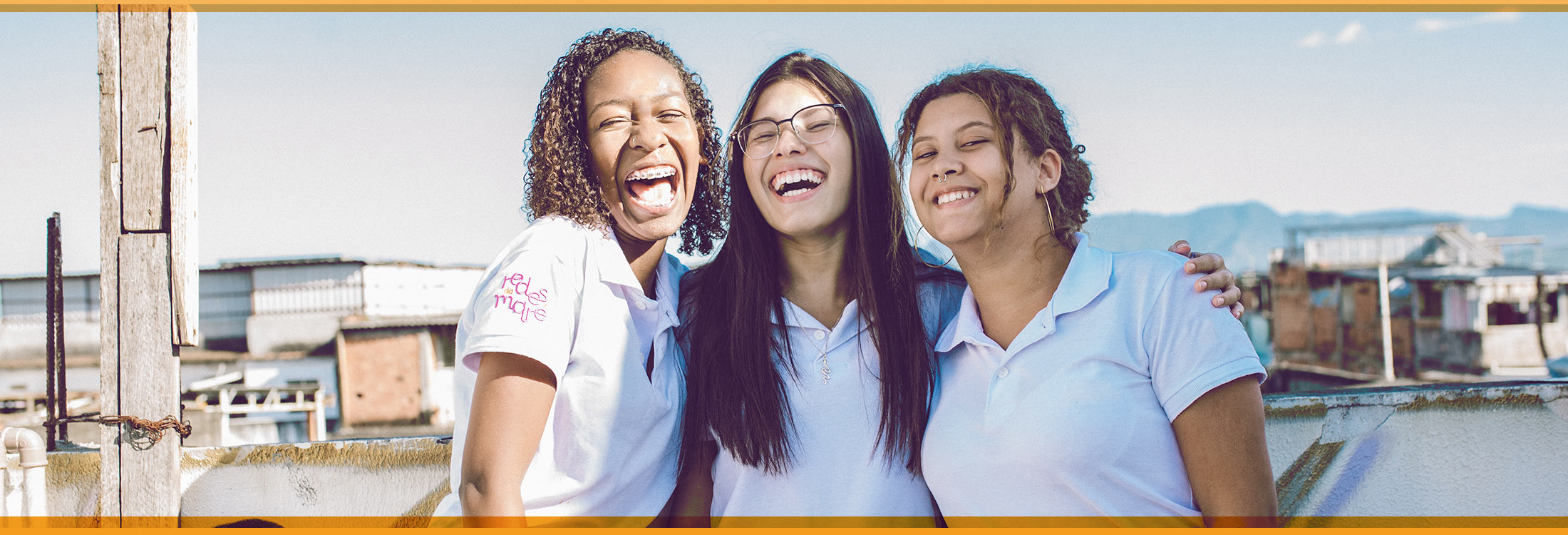
At the end of 2019, Redes da Maré established a partnership with the Malala Fund with the shared commitment to help ensure the right to education for girls and adolescents in Maré. From this alignment between institutions, the Every Girl in School project was born, combining the power of the Malala Fund with Redes da Maré’s educational and community-driven mission.

Since April 2020, the project has been working to expand access to free, quality education for more than 8,500 girls aged 11 to 17 living in the 15 favelas of Maré. It also aims to influence public policies that ensure school attendance and retention. Between 2019 and 2025, through active search and monitoring efforts, the project identified around 2,326 children and adolescents who were either out of school or had low attendance. At the time of registration, 31% were out of school and 69% had irregular attendance. Currently, 14% are still out of school and 2% remain infrequent. As a direct result of these efforts, many children and adolescents have returned to the classroom.

Among those who have not yet secured enrollment, the majority (77%) are still seeking placement in schools near their homes. These figures highlight the urgency for effective public policies that are connected to the realities of the territory.

Methodology and Active Search

The methodology of project is based on six core strategies, with actions that directly contribute to ensuring the right to education for children and adolescents in Maré:

1. Active School Search::

A strategy focused on identifying children and adolescents who are out of school or at risk of dropping out, through direct engagement with students and their families. The goal is to understand the causes behind their absence or lack of enrollment and to support their reintegration into the education system. This process also involves collaboration with family protection services through an intersectoral approach.

The process begins within the community and includes several points of entry:

  • Lists of students who have dropped out or show low attendance, provided by schools;
  • Referrals from local institutions, such as residents' associations;
  • Identification of new cases during home visits to families already being supported;
  • Community outreach events and mobilization efforts;
  • Pre-enrollment campaigns.

2. Training with educators and students:

Educational workshops focused on gender, race, and identity, promoting a more inclusive and socially aware approach to education.

3. Coordination with local institutions:

Partnerships with schools, healthcare units, social assistance services, and cultural spaces, strengthening a support network for school retention.

4. Community mobilization:

Public campaigns and outreach actions across Maré to raise awareness about the importance of education and encourage students to return to school.

5. Policy advocacy:

Engagement with public authorities to ensure school placements and to remove institutional barriers that hinder access to education.

6. Data production and analysis:

Gathering and systematizing information on absenteeism and school dropout in the territory to inform the project's actions and reinforce advocacy efforts.

Enrollment Campaign: “Vamos pra Escola” (Let’s go to School)

A key component of the project, the “Vamos pra Ecola” campaign is conducted annually in partnership with the Municipal Department of Education and has become a well- established community initiative in Maré.

From 2022 to 2025, the campaign has become a staple in the local calendar. Many families now seek out Redes da Maré for updates on the campaign, a clear sign of trust and its relevance in the community.

During the Municipal School Network’s pre-enrollment period, the campaign offers in- person assistance at strategic locations throughout Maré. It also deploys mobile teams that walk through the community registering students and helping families understand the school enrollment process. Since the enrollment process is fully online through www.matricula.rio, the campaign plays a vital role in helping those who lack internet access or face difficulties filling out the form.

Each edition involves around 100 volunteers and has supported over 1,000 people in four years. By offering technical support and personalized guidance, the project strengthens the right to education in Maré and reduces access barriers within the education system.

GIRLS EDUCATION AND COVID-19 RESEARCH

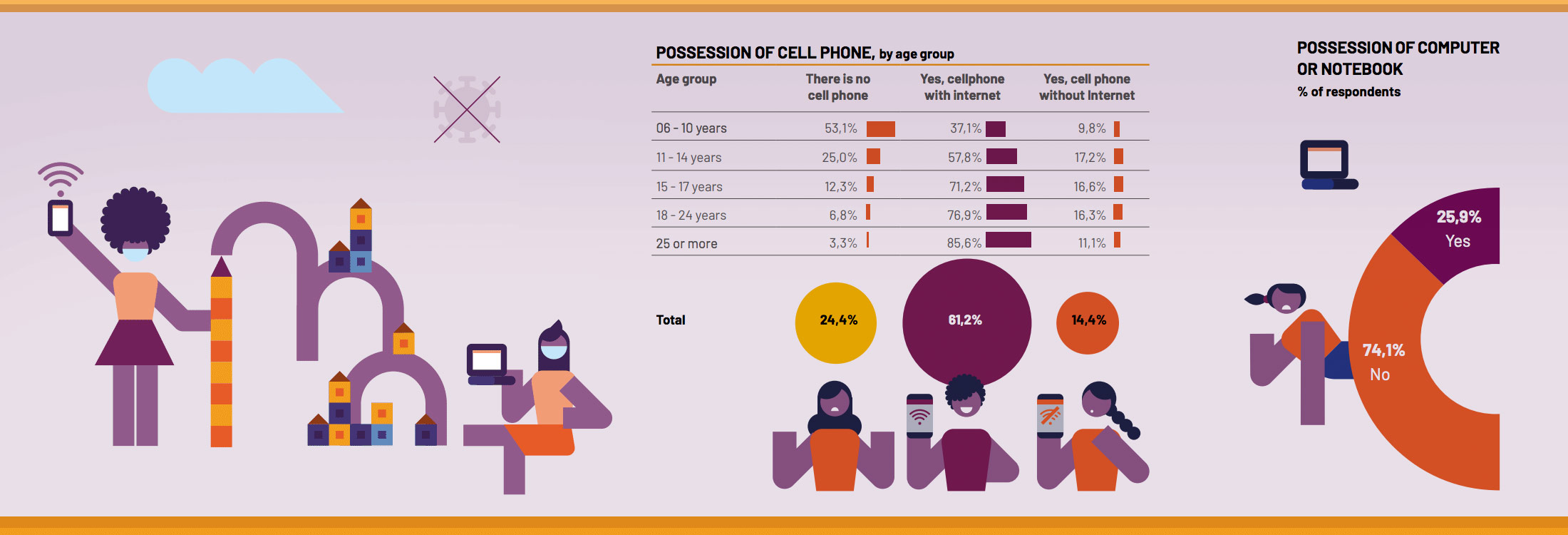
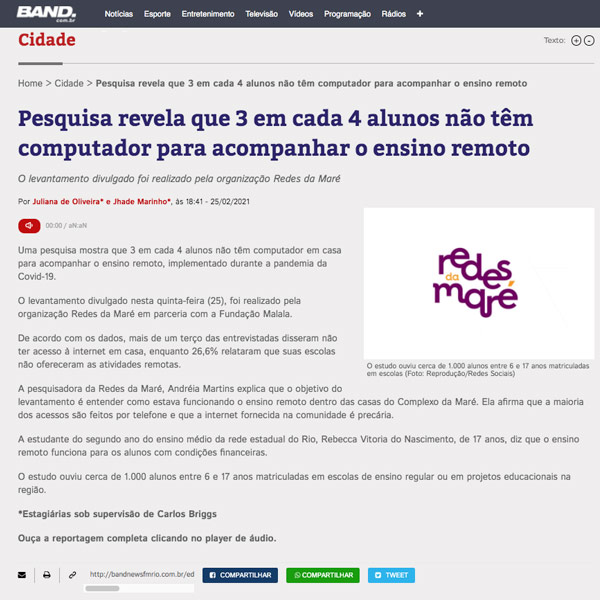
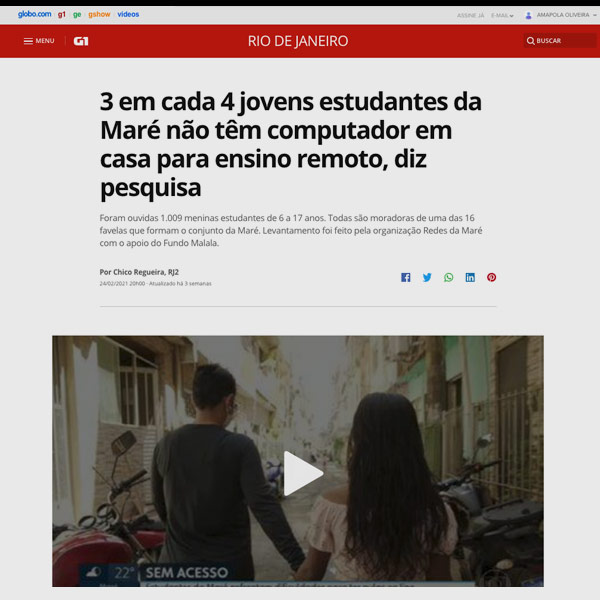
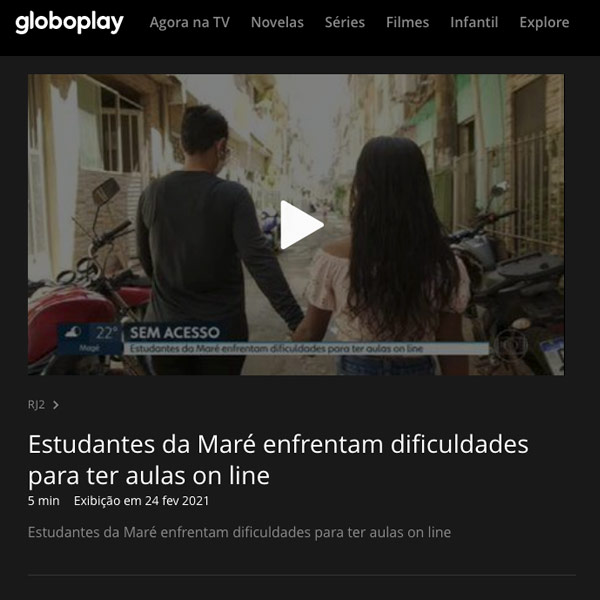
With the pandemic and the consequent need to suspend classroom activities in schools, the initial milestone of the project was a survey in the territory to learn more about the impacts of Covid-19 on girls' studies. Through online questionnaires and field research, obstacles were identified in their educational trajectories. The survey was attended by more than a thousand girls and women from Maré, from 6 years of age. It was sheld in the second half of 2020 and released in March 2021.


SEE THE COMPLETE RESEARCH


STAGES OF WORK


ACTIVE SEARCH

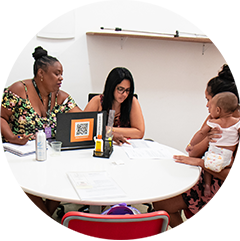
Through information from different sources or spontaneous searches, home visits are made to find girls who are not studying or who have low school attendance.


IDENTIFICATION / TROUBLESHOOTING

After contacting families and identifying the reasons for girls' infrequency and dropout, solutions are sought for reintegration into schools, through local networks and public facilities for education, health and / or social assistance.


ADVOCACY

Promote the articulation between the state and municipal education networks; strengthen the discussion of gender at schools of Maré; contribute to the search for alternatives to replace classes lost due to armed conflicts; stimulate intersectoral articulation, especially between public facilities for education, social assistance and health.


ABOUT THE PROJECT


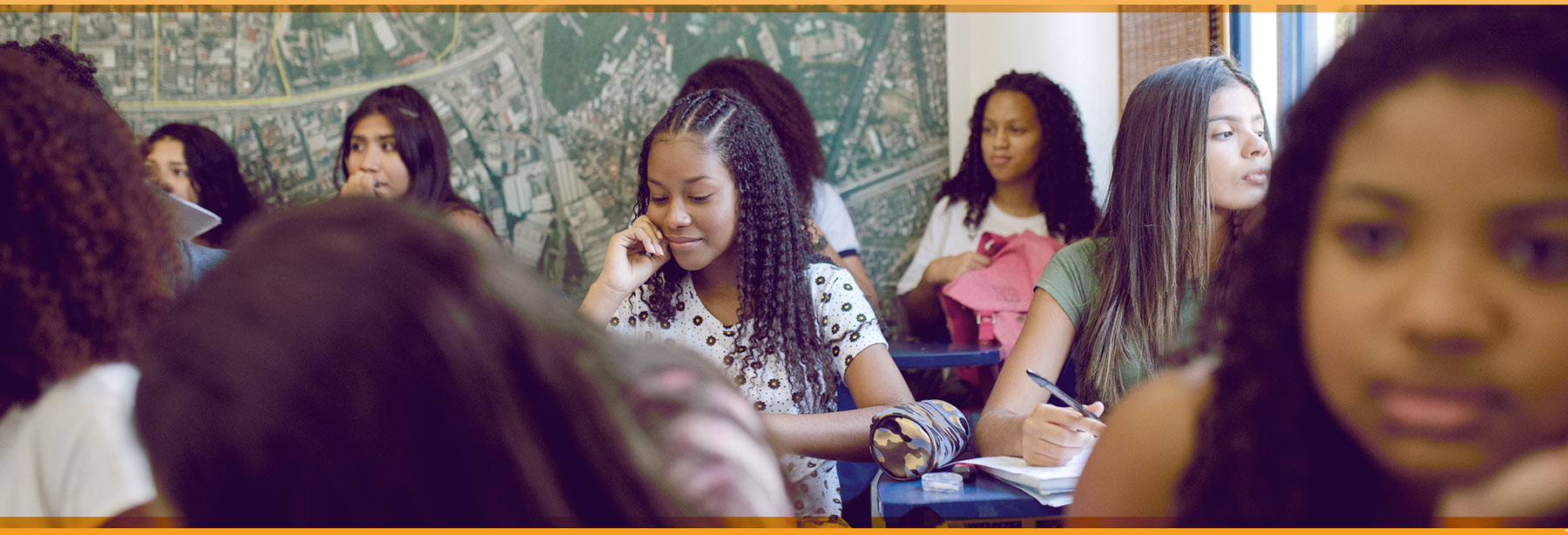
The initiative seeks to expand the right to education for approximately 8,589 girls between 11 and 17 years old, residing in Maré. It is intended, in addition to the identification of girls outside the school environment, to promote their reception and reintegration into schools. Considering some factors, such as the low number of schools from the 6th to the 9th grade, the high dropout rate from high school, the distortion by age and the limited discussion of gender in public schools, the project has 3 main objectives: to guarantee the constitutional right to a public, free and quality education for all in school age; to conduct an active search of the priority public; to articulate public institutions from different areas to fully comply with the legislation.


Malala Fund is an international, non-profit organization that supports initiatives so that all girls can have access to 12 years of free, safe and quality education. It was founded in 2013 by Malala Yousafzai, a female education activist and her father, Ziauddin Yousafzai. The fund operates in eight countries: Afghanistan, Brazil, Ethiopia, India, Lebanon, Nigeria, Pakistan and Turkey. In Brazil, it supports seven institutions in the states of Pernambuco, Bahia, Rio de Janeiro and São Paulo, including Redes da Maré.

MALALA YOUSAF

Malala Yousafzai is a Pakistani activist. She was the youngest person ever to be awarded a Nobel Prize, and is known primarily for defending women's human rights and access to education. In 2013, Malala was on the cover of Time magazine and considered one of the 100 most influential people in the world. In the same year, Malala spoke at the United Nations headquarters, calling for universal access to education.

TEAM


Coordination:

Andreia Martins and Alessandra Pinheiro


Supervision:

Alessandra Prado
Claudia Martins
Debora Souza Garcia
Nivia Claudia Katica
Teresa Cristina Silva
Vanessa Carneiro Garcia
Zeneida Duartes


PARTNER

Fundo Malala 


Credit photos: Yasmin Velloso / Fundo Malala

NEWS


RELATED PROJECTS

Stay tuned! Sign up for our newsletter